 515.441.6890
Industry - Waterworks Manufacturer
Printing Technology - Stereolithography (SLA)
THE CHALLENGE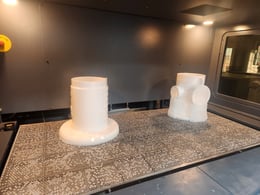
For decades, Clow Valve's sales team relied on full-size production fire hydrants for trade shows, customer demonstrations, and sales activities. While authentic and visually impactful, these hydrants came with a major drawback:
-
Each unit weighed up to 400 pounds
-
Required specialized freight handling and shipping
-
Created significant labor challenges for setup and teardown
-
Increased transportation and logistics costs
-
Limited flexibility for events and customer visits
Transporting cast-iron hydrants across the country was costly, time-consuming, and physically demanding for the sales team.
Clow Valve needed a smarter, lighter, and more efficient solution-without sacrificing realism or brand quality.
THE SOLUTION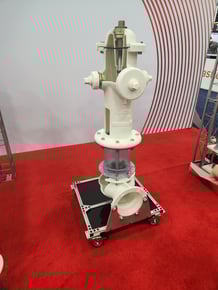
Clow Valve partnered with RP America’s 3D Parts Service team to develop high-quality, lightweight 3D printed hydrant assemblies.
Using advanced additive manufacturing technology, RP America:
• Produced full-scale, highly detailed replicas
• Ensured accurate geometry and brand fidelity
• Engineered assemblies for durability and repeated event use
The result: a full hydrant display unit weighing approximately 55 pounds total—a dramatic reduction from over 400 pounds.
THE RESULTS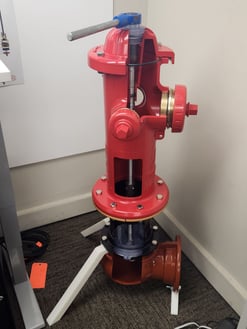
Weight Reduction:
From 400 lbs → ~55 lbs
Over 85% reduction in weight
Operational Benefits:
• Simplified shipping and handling
• Reduced freight costs
• Faster trade show setup and teardown
• Increased flexibility for customer demos
• Less physical strain on sales personnel
Scalable Production:
Clow Valve is launching with 30+ 3D printed hydrant units, with plans to expand production as their product line grows.
Topics: Case Study, 3D Printed Parts
 Older
Older
.svg "RP America Logo")


